Work / Honda Safe Swarm

Turn a concept
into an experience.

Honda’s R&D team came directly to us to make connected-vehicle technology visible. We built a shared, first-person VR experience for CES, then created supplemental films to explain more of the proposed functions to Honda colleagues, the public and other stakeholders.

Immersive experience · CES

Project takeaway

Honda gained a four-seat VR presentation for CES and supplemental films explaining more of the proposed technology.

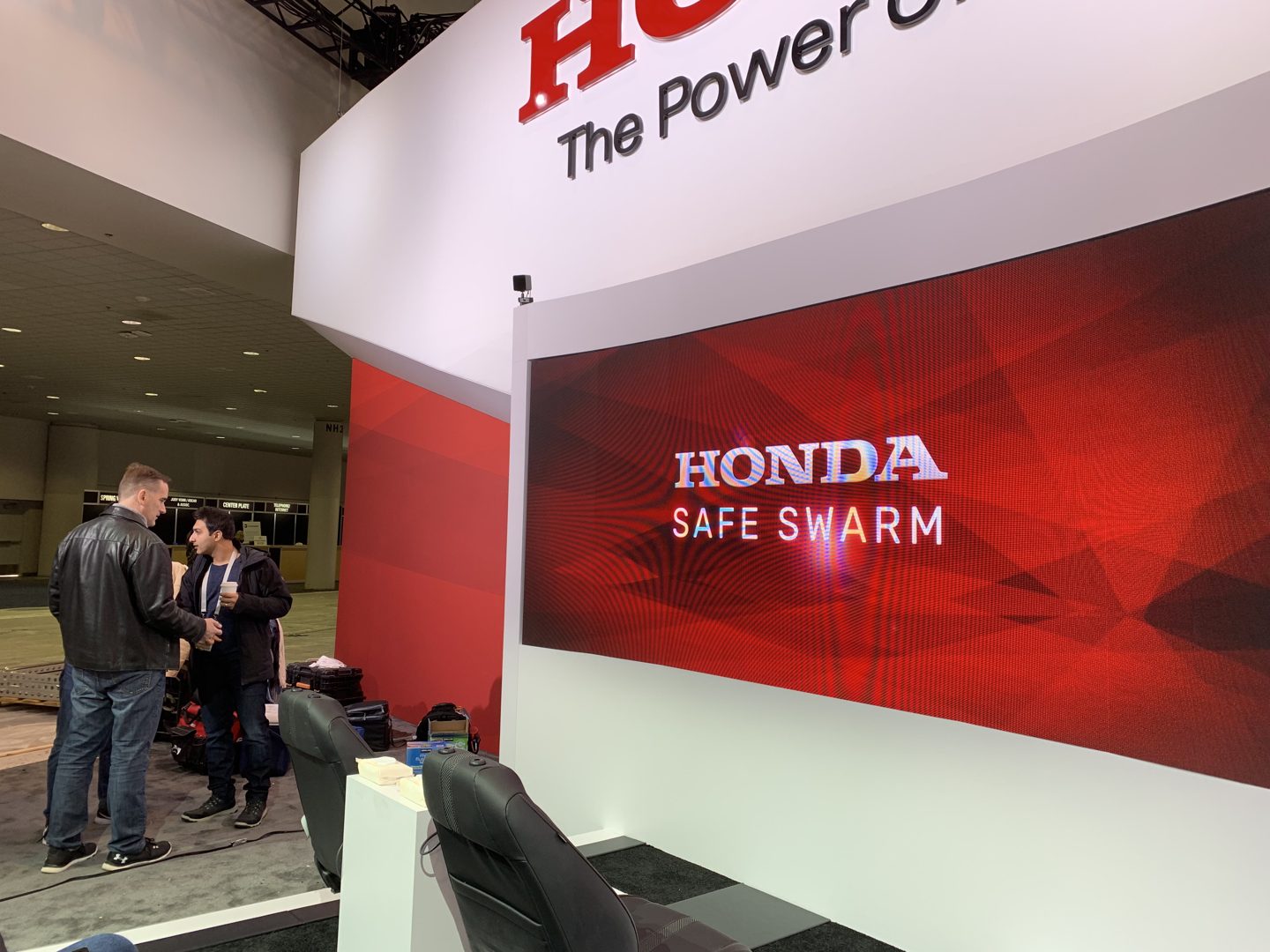
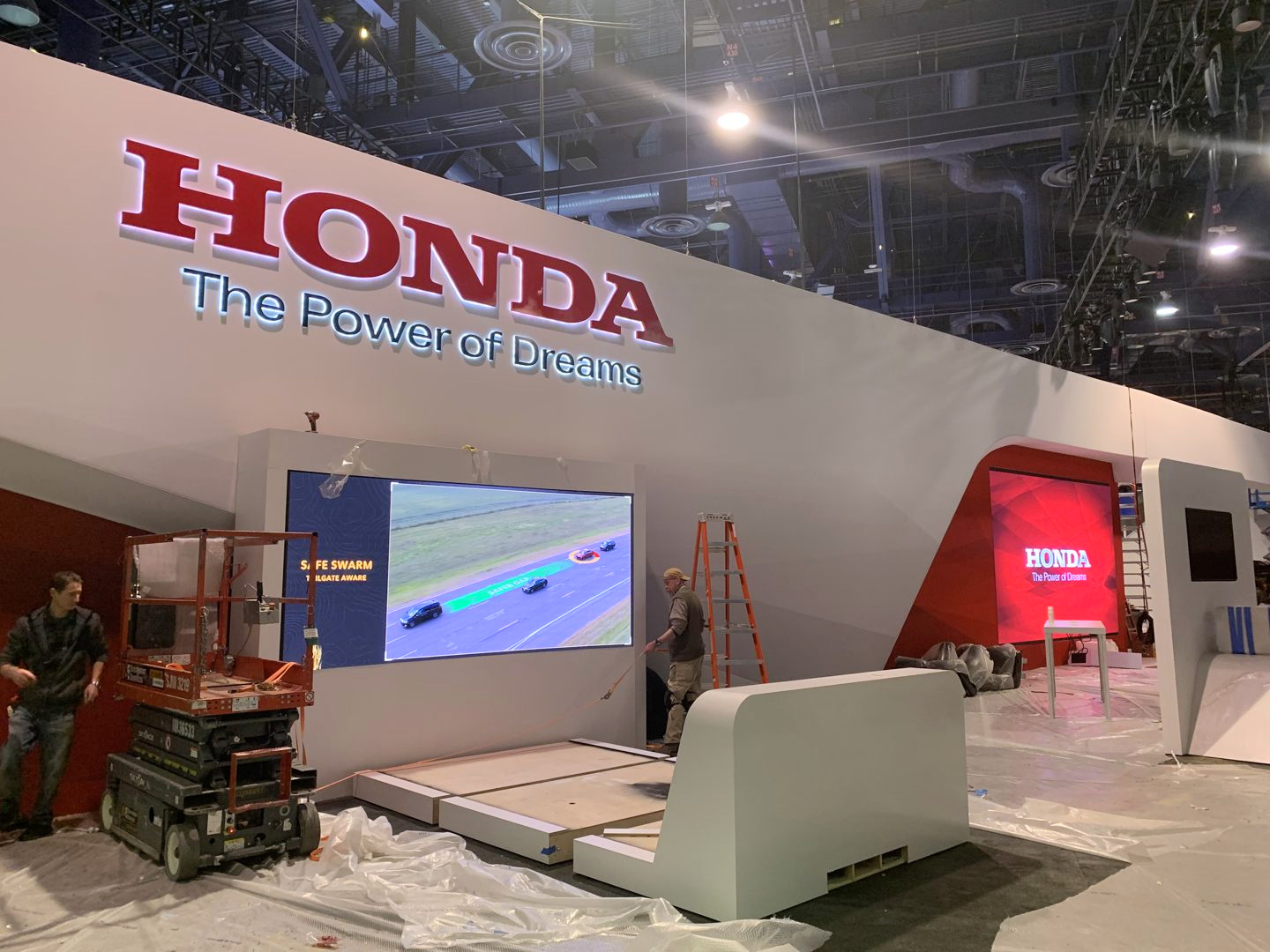
Honda Safe Swarm display and vehicle seats during CES setup
Preparing Honda’s Safe Swarm experience for visitors at CES.

The challenge

Some of the technology was still theoretical, and it was not installed in the vehicles available for filming. Honda wanted visitors to experience how vehicles could exchange information and coordinate their movements. We needed to make that proposed system understandable from the driver’s perspective.

Our solution

We directed drivers by radio to stage the scenarios, capturing both the surrounding traffic and the driver’s view in 360°. Stereoscopic dashboard graphics and spatial sound brought the proposed technology into the scene. We then tested the experience, built synchronized playback for four headsets and supported Honda’s booth at CES.

The result

  • First-person VR presented at CES with four synchronized headsets
  • Supplemental films covering additional Safe Swarm scenarios
  • Production material later reused in another Honda video

Coordinated track filming · 360° capture · Stereoscopic graphics and spatial sound · Custom playback control · CES technical support

Powered by OHD Studios.

How it came together

Film the scenarios. Build the experience.

The vehicle scenes, digital displays, directional sound and shared playback had to work as one experience.

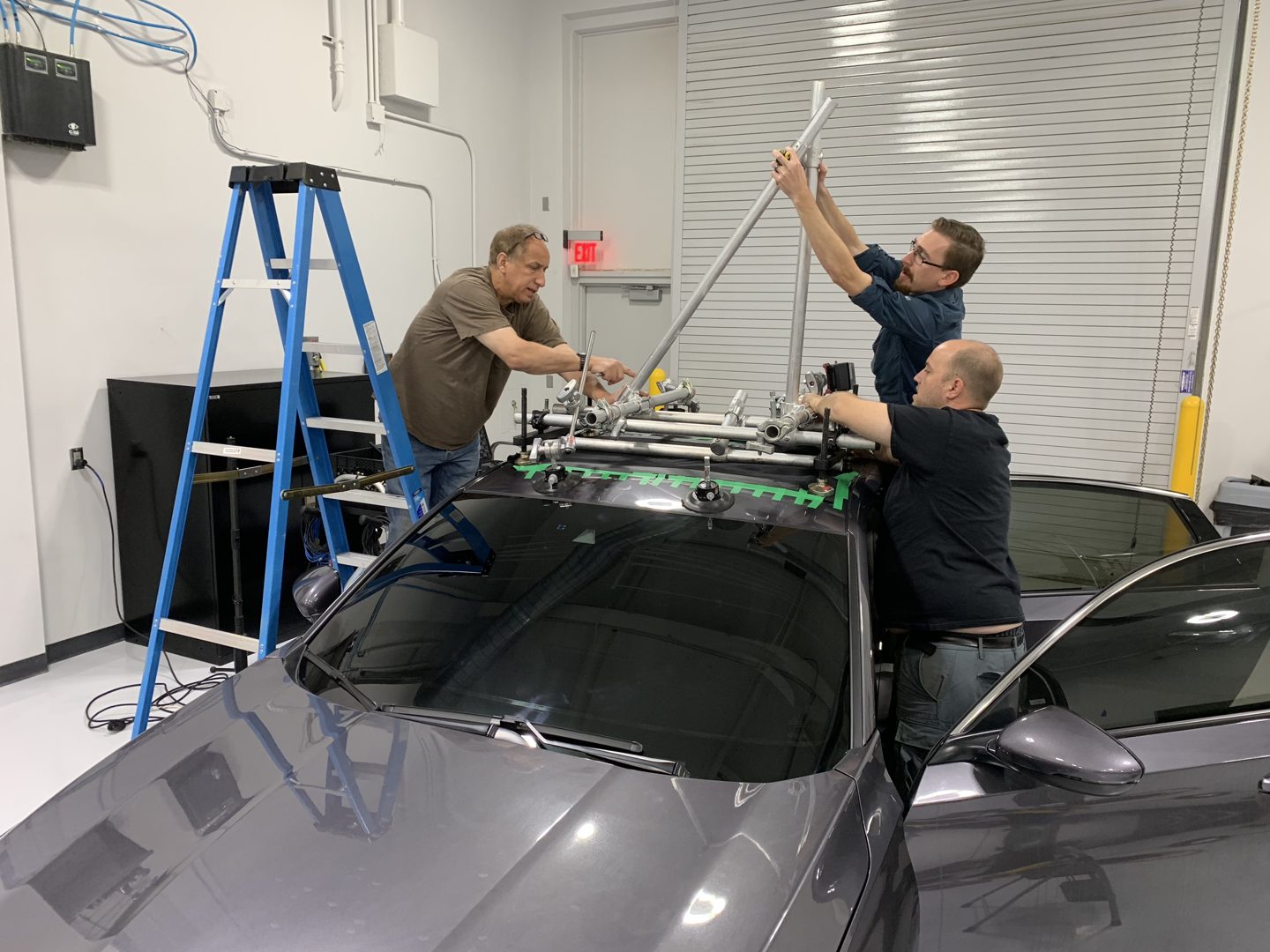
Crew building a camera mount above a Honda at the test track

Capture the traffic and the driver’s view.

A rooftop 360° camera recorded the surrounding vehicles. A separate camera at the driver’s head position supplied the first-person view through the windshield and side windows.

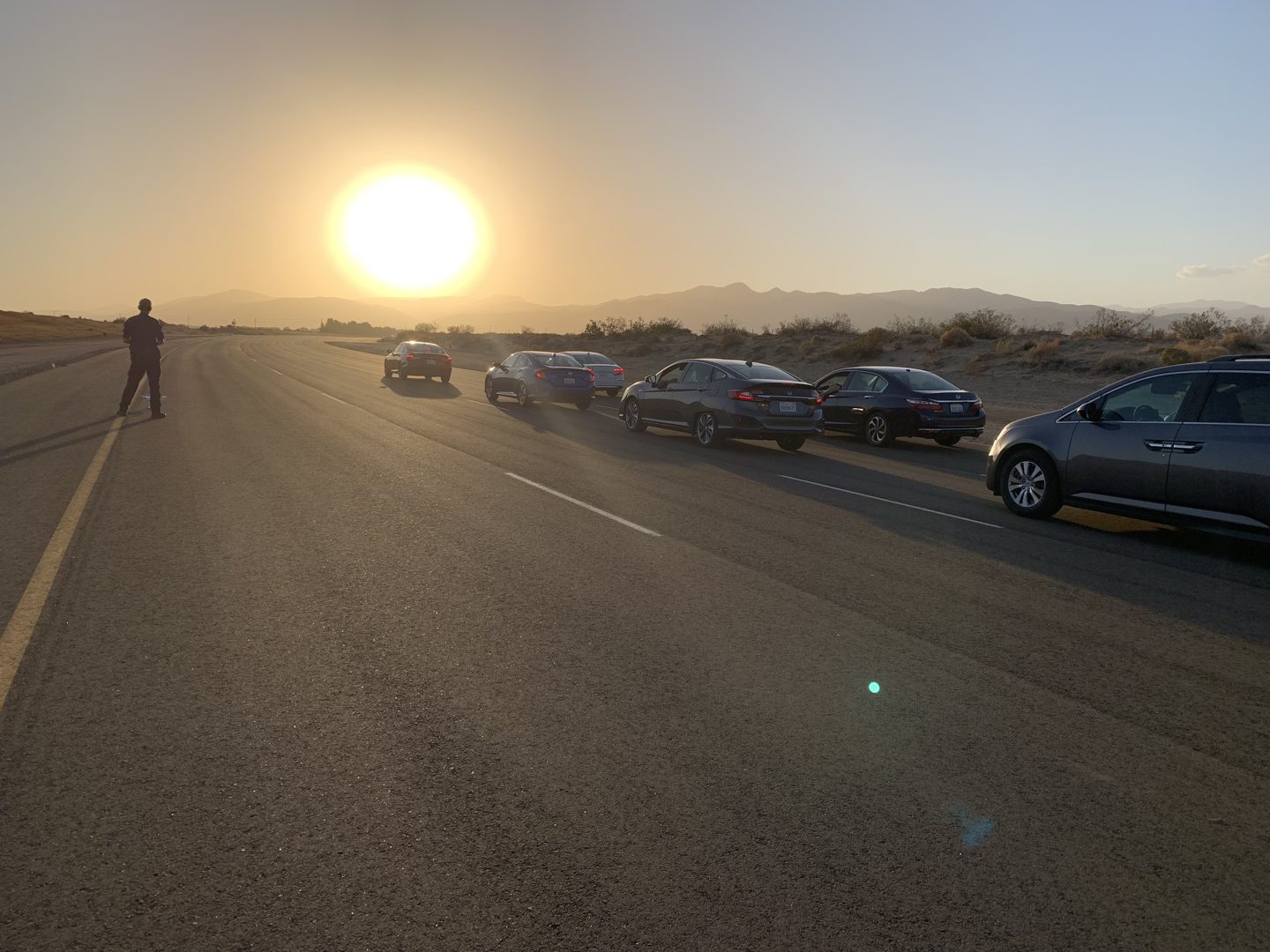
Honda vehicles lined up on a test track in low evening light

Coordinate the driving scenarios.

Radio direction guided the platoon through passing, merging and other interactions. These staged movements showed what the proposed technology was intended to coordinate.

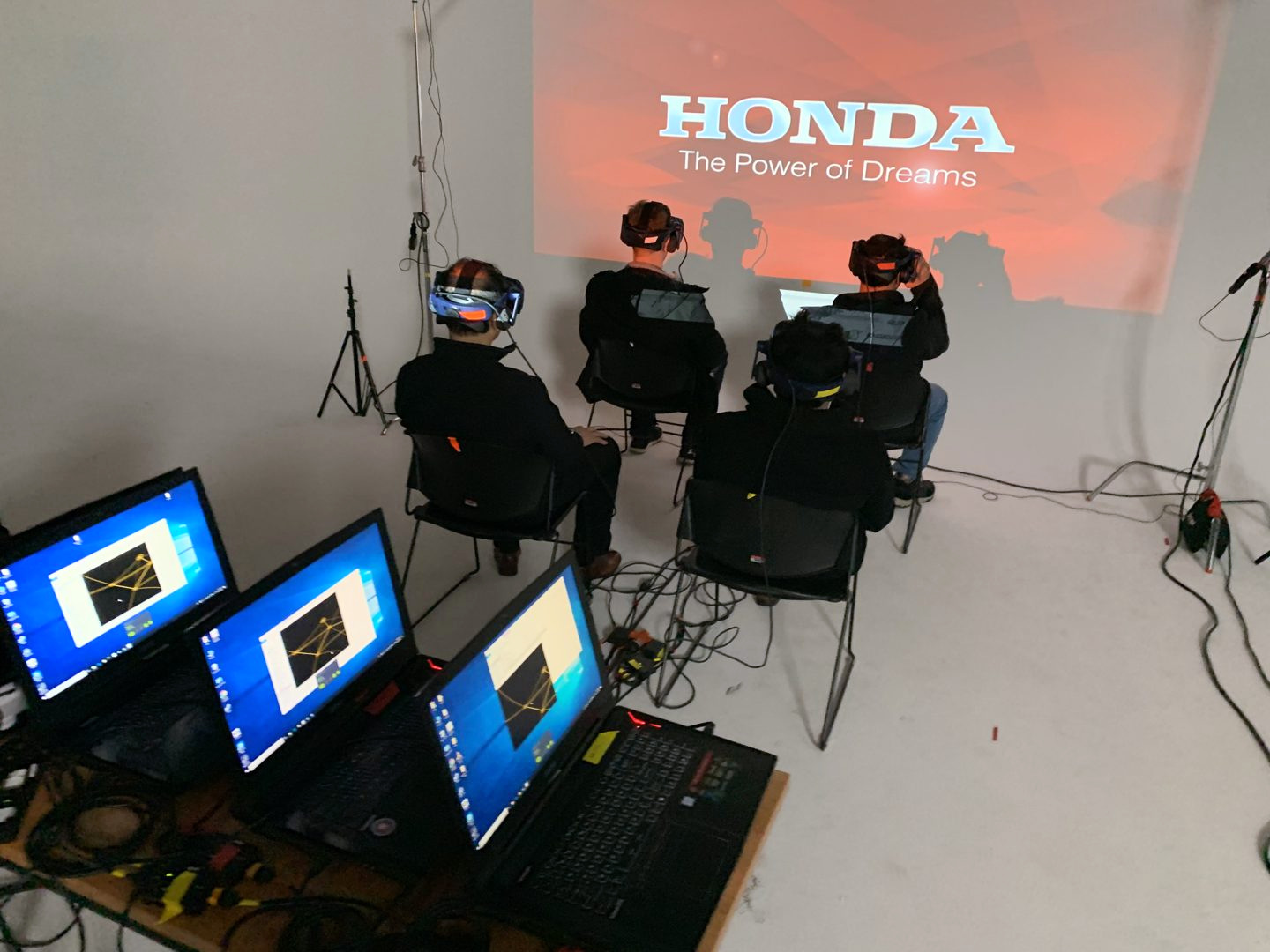
Crew testing VR headsets with laptops in the studio

Build and test the immersive experience.

We integrated stereoscopic dashboard graphics and 360° spatial sound, then tested the experience in headsets. Experimentation and work with technology manufacturers helped prepare the system for the show.

Honda exhibition stand and screening area during CES installation

Share the same experience at CES.

David Jeffries created an iPad app to start the same VR experience on all four headsets at once, so visitors could see and react to the same events. Scott Handel and David helped set up Honda’s booth and operated the system during the show, providing on-site technical support.

Solutions in Motion.

Explaining technology at an event?

Tell us what you want the audience to understand and how they will encounter the experience.

Let’s talk